
Plate Detection - Alpha 2
Date: February 25, 2026
We hit the next milestone in our AI + computer-vision pipeline: Alpha 2.
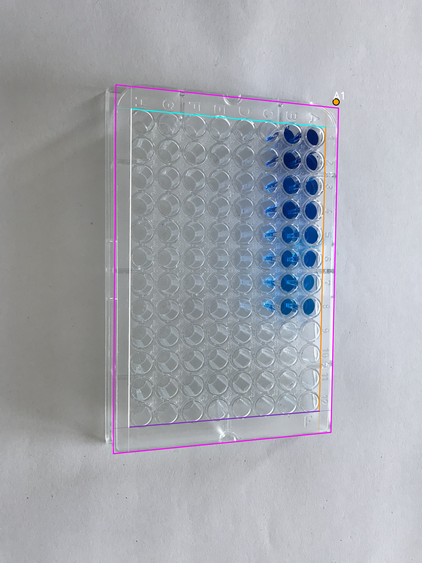
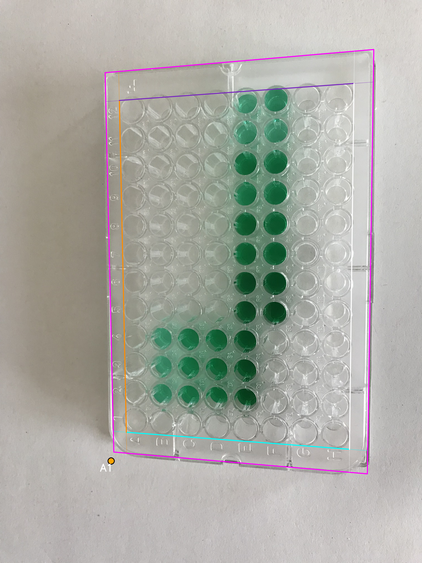
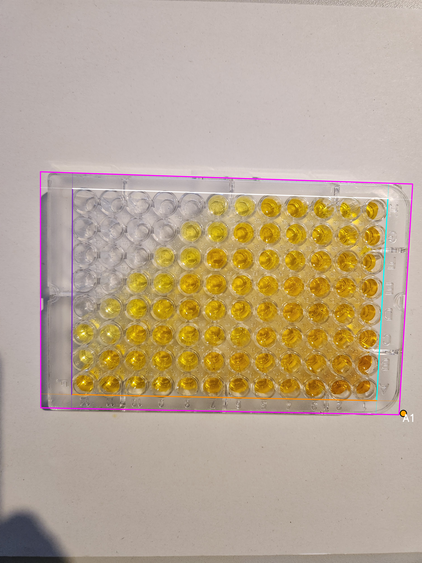
The plate outline is now much closer to the true border - including on tilted images, where skew and perspective used to be hard.
We also detect the wells area correctly in most capture conditions.
This gives us a stronger base for what’s next: grid-accurate analysis and reliable on-device performance.
What’s new in Alpha 2
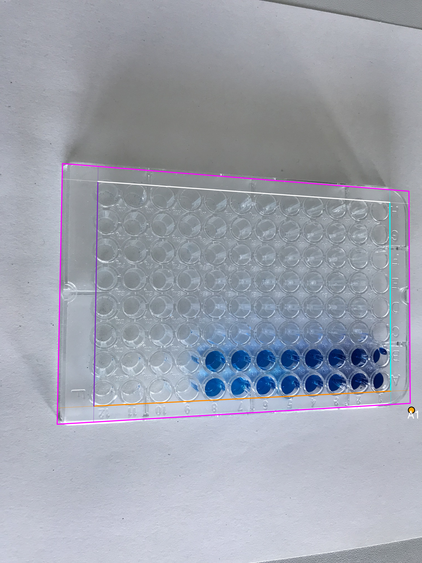
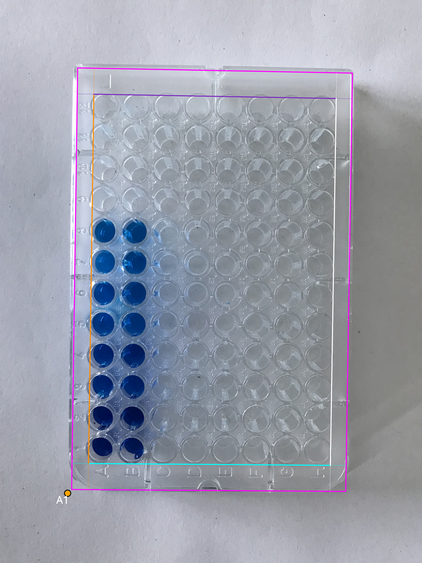
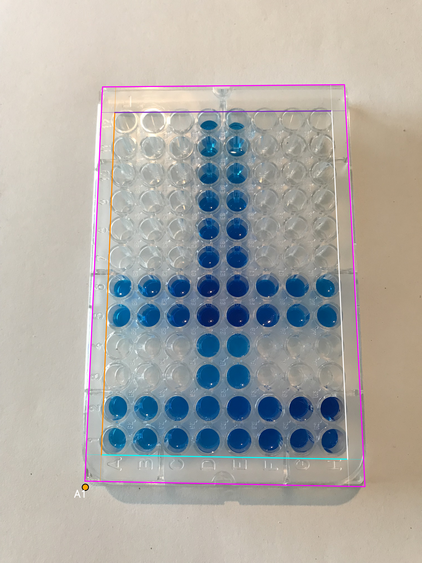
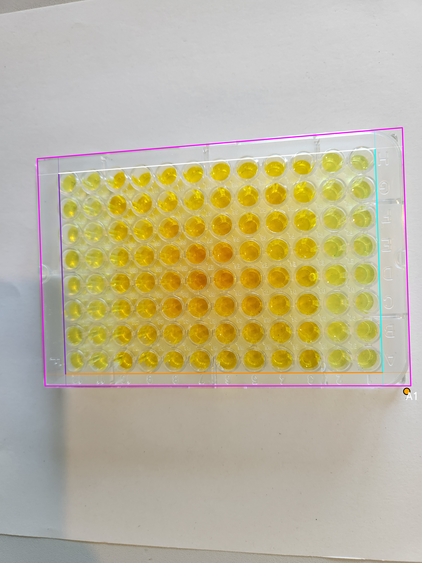
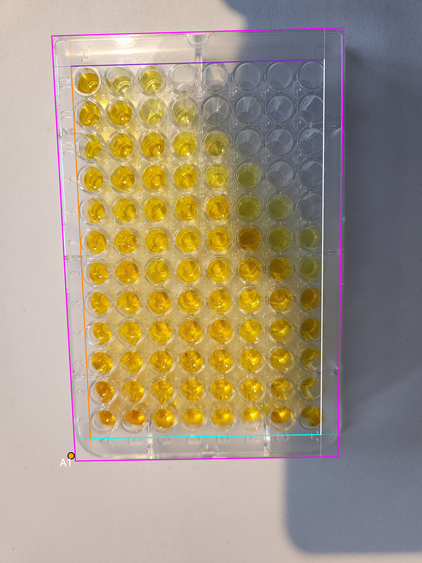
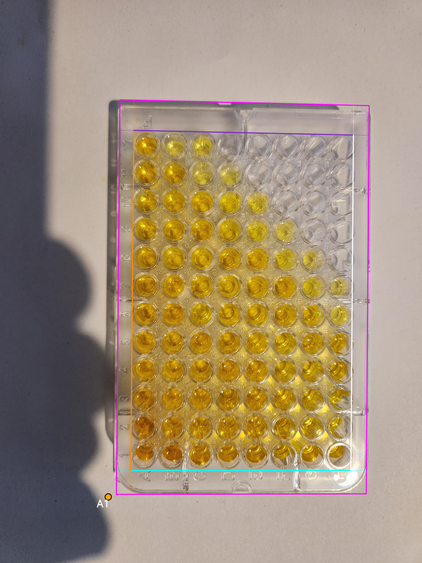
How to read the demo images
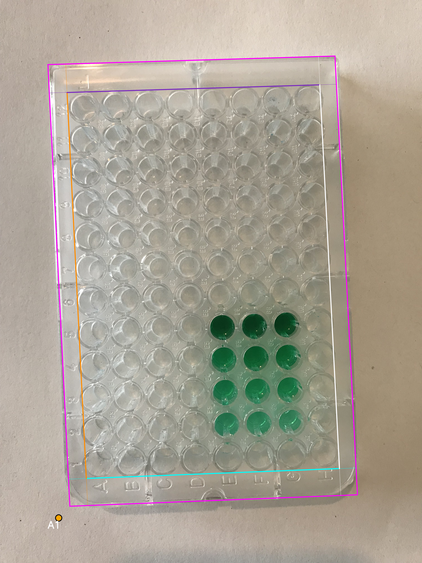
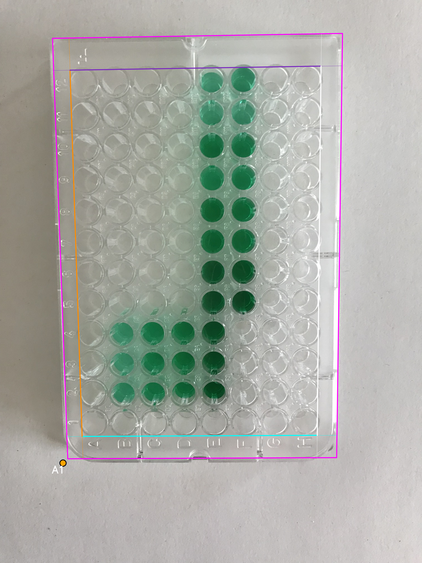
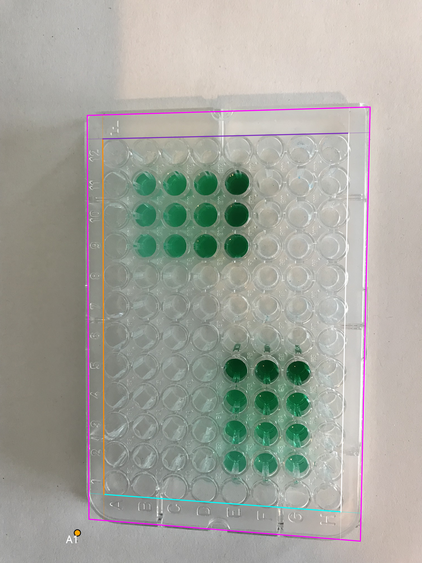
- Plate outline: magenta quad
- A1 corner: yellow marker with A1 label
- Wells area boundary: four lines (canonical orientation - the plate is shown upright, with column 1 on the left and row A at the top)
- Left: cyan
- Top: orange
- Right: deep purple
- Bottom: white
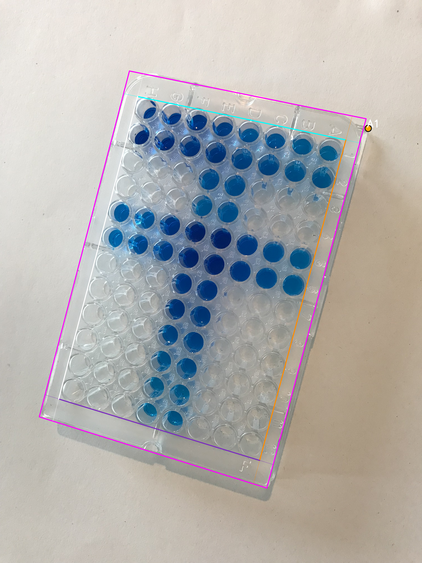
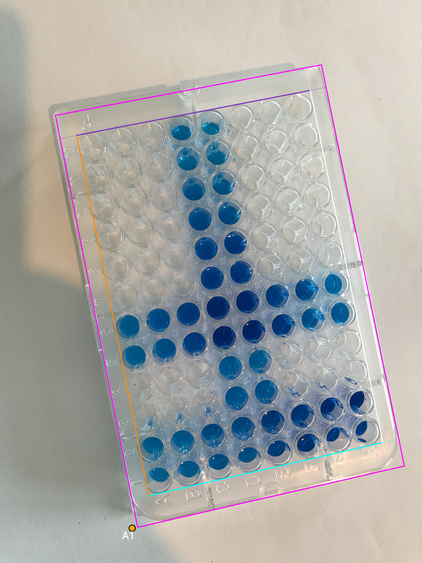
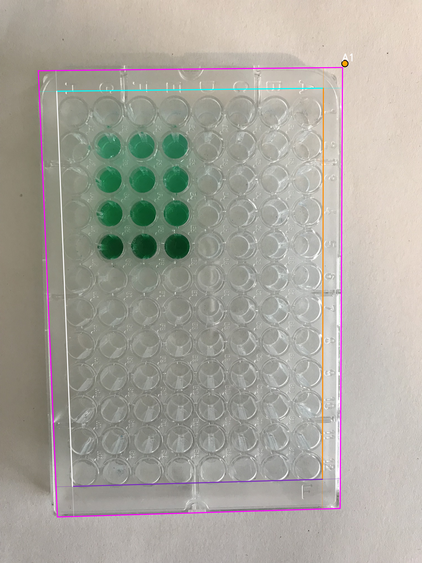
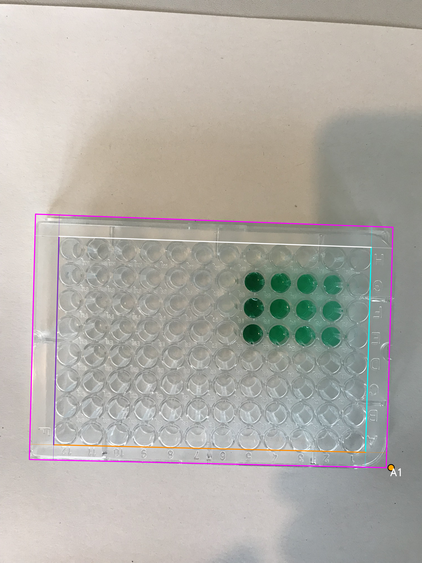
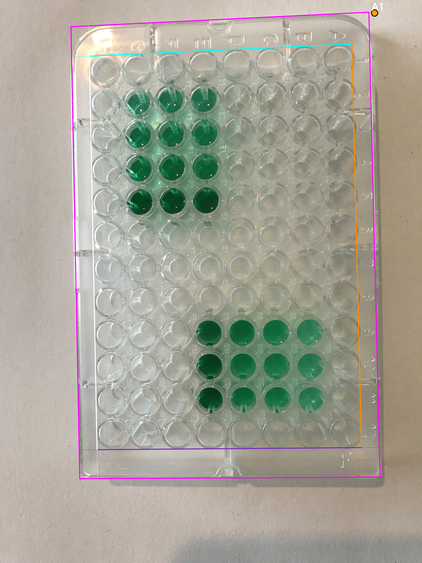
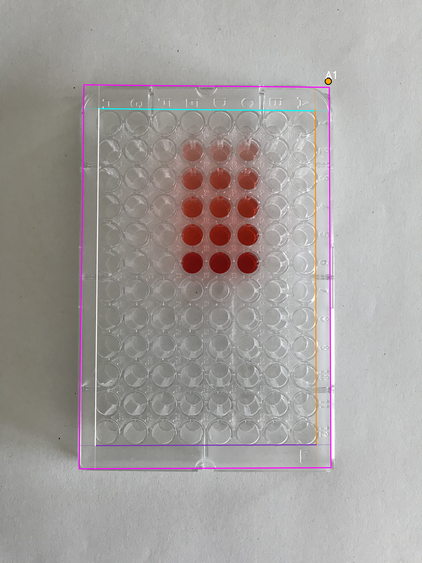
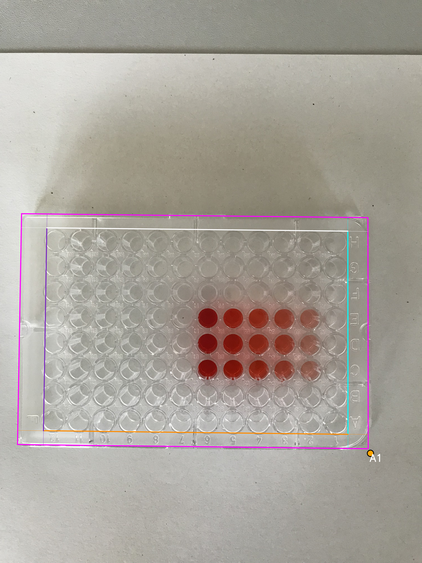
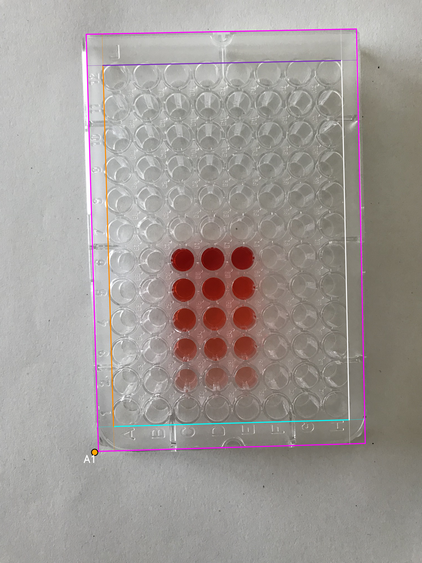
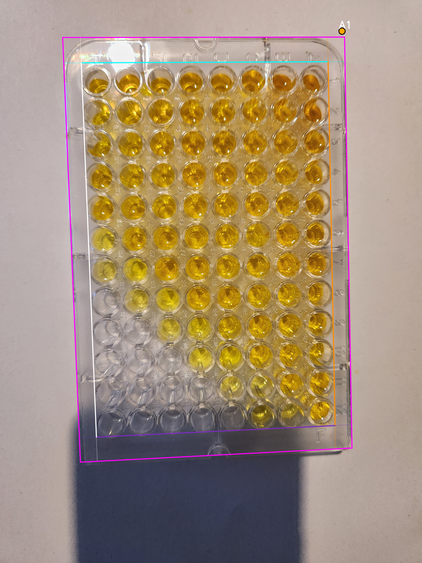
1) Plate outline: closer to ground truth
The outline is tighter. It’s more stable across angles and lighting.
That means less drift - and better alignment for downstream steps.
2) Wells area: reliably identified
We now isolate the wells area consistently.
That’s a key prerequisite for accurate grid fitting and well-level analysis.
3) Known edge cases (still to fix)
A few patterns remain:
- Wells boundary offset: sometimes the wells boundary shifts by about the wells rim thickness. In two extreme cases, the left boundary lands on printed text.
- Plate edge ambiguity: on some sides, the outline snaps to the upper edge of the plate; on others, it snaps to the outer edge. Both can look plausible, but they change the geometry slightly.
- Shadows: under strong shadows, the outline can partially follow the shadow edge instead of the true plate edge.
These are the main targets for Beta hardening.
4) Hybrid pipeline: the right approach
This milestone validates our direction.
AI handles real-world variability. Classic computer-vision tightens geometry and stabilizes results.
Together, they’re more accurate - and more predictable.
What’s working today
- Plate outline detection across typical angles and lighting
- Correct orientation handling (A1 corner marker supports consistent alignment)
- Wells-area detection is solid enough to move forward with grid work
What’s next (Beta target: June 2026)
1) More data, better training
- Expand coverage across more angles and lighting
- Add more edge-case samples (especially hard cases)
2) Stronger edge-case robustness
- Better handling of reflections and low contrast
- Better handling of strong shadows (follow the plate, not the shadow)
- Reduce boundary drift so the wells boundary lands consistently on the wells edge (not rim thickness or text)
3) Smartphone integration
- Integrate detection into the current Spotxel® Reader app
- Optimize speed and memory for on-device use
- Apply packaging/quantization for reliable mobile inference
Release timing update
In our October 31, 2025 update, we expected first public builds around January 2026.
After broader testing - especially tilted images and tough lighting (reflections, low contrast, shadows) - we shipped Alpha 2 internally to meet our quality bar.
Next milestone: Beta in June 2026, pending final edge-case validation and mobile performance.